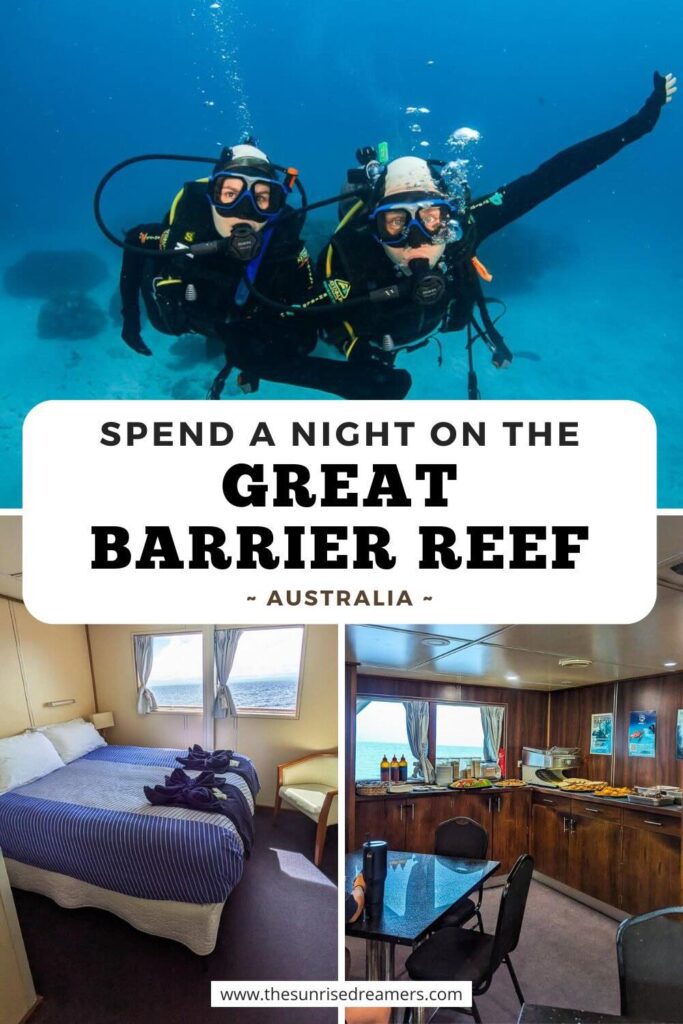
The Great Barrier Reef is one of the most well-known reefs in the world, located in Queensland, Australia. It’s the largest coral reef ecosystem and one of the seven natural wonders of the world. So, of course, we were very excited to visit!
Australia is a country that has been on our bucket list for years, and we had 3 weeks to make our dream trip happen (safe to say, we had the best time). On our Australia itinerary, we spent 6 days based in Cairns, visiting the iconic Great Barrier Reef and the mystical Daintree Rainforest.
After lots of research and as PADI certified divers, we decided a liveaboard would be the most amazing way to experience the incredible reef. We swam with sharks at night and jumped in the water at sunrise, which isn’t possible on a day trip!
A Liveaboard isn’t just for divers; we met many snorkelers on board and also snorkelled twice ourselves. Some of the reefs are shallow enough to see beautiful marine life, including reef sharks!
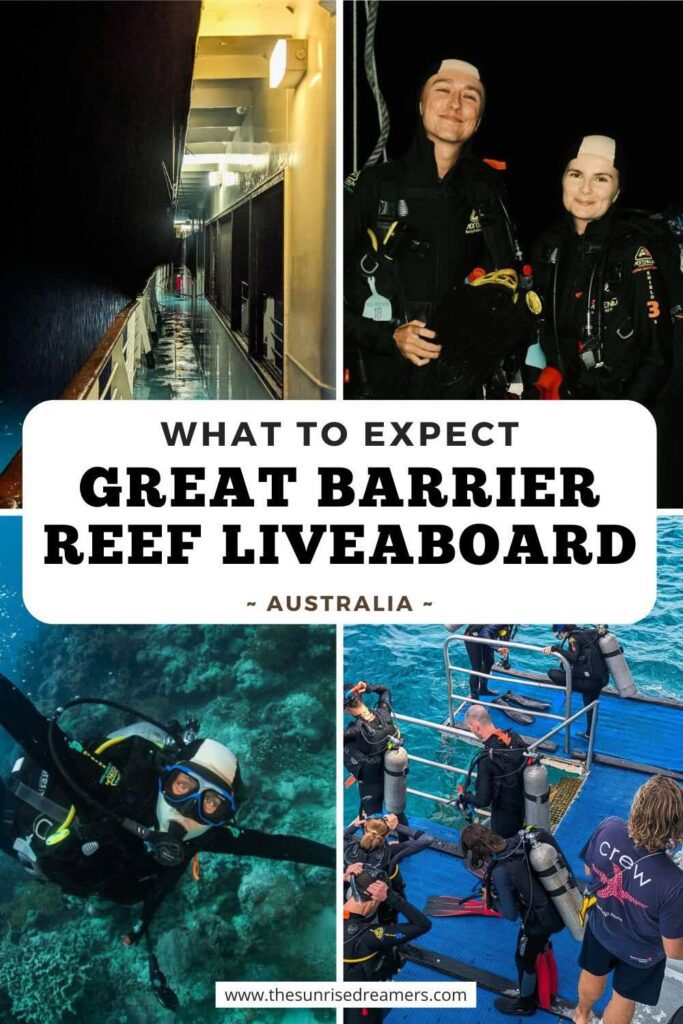
It was truly magical and we’ll never forget these moments! So now we’re going to share our experience with you and what to expect from a Great Barrier Reef Liveaboard.
We paid for this Great Barrier Reef Liveaboard ourselves and booked it directly through their website. This post may contain affiliate links. We will receive a small commission if you make a purchase using these links, at no additional cost to you.
What is the condition of the Great Barrier Reef in 2026?
This was a question we asked ourselves before booking our Great Barrier Reef Liveaboard.
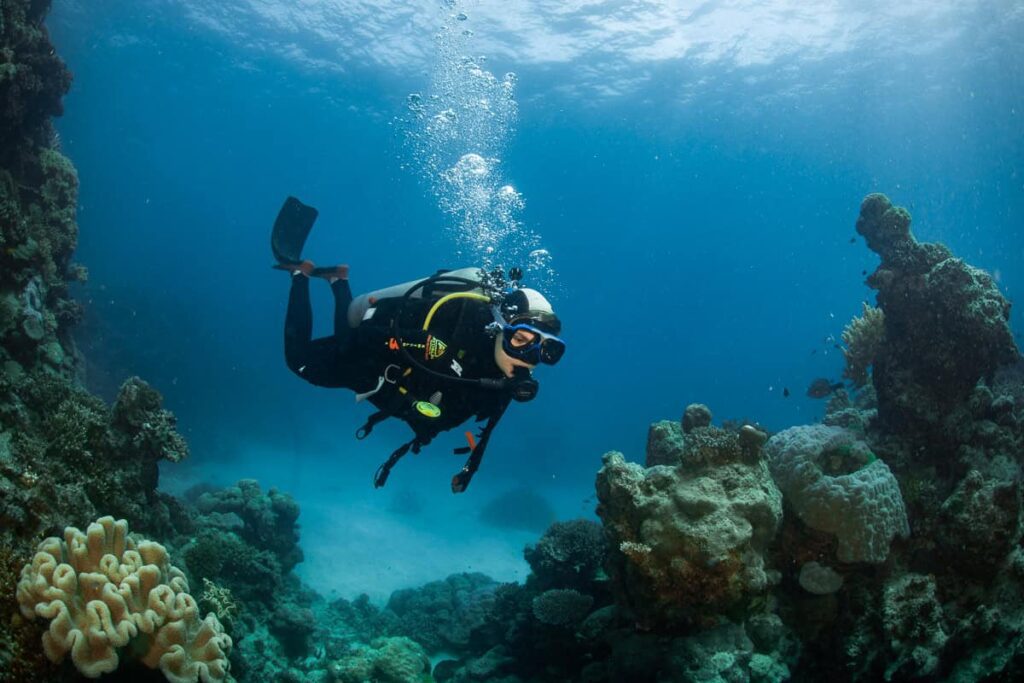
The Great Barrier Reef is home to over 1,500 species of fish and an incredible number of hard coral species. Sadly, it’s no hidden secret that this UNESCO wonder is disappearing.
There are multiple reasons why the reef is dying, and realistically, nothing will ever repair the reef back to what it looked like 50+ years ago. From bleaching, ocean temperatures, acidification and the daily traffic the reefs receive, the reef is truly struggling.
Many organisations are repairing the reef, but some bleaching events from the weather can cause so much damage that the health of the reef is just about stable.
After visiting, we can say the reefs are looking beautiful! Not everything is super bright, but there are lots of fish. We can’t compare to what it may have looked like years ago, but honestly, if you want to visit, the best time to visit the reef is now.
Things to know before a Great Barrier Reef Liveaboard
Here’s a brief overview of what to expect from a Great Barrier Reef Liveaboard:
- Good weather isn’t guaranteed (make sure you have insurance (DiveAssure))
- There may be lots of motion on the boat from strong waves. You can purchase sea sickness tablets on board or bring your own.
- Prepare yourself for multiple dives or snorkelling a day, as it can feel fast-paced
- In Australia, they can cater towards a vegan or gluten-free diet
- You may not get to see every fish you want
- The beds are incredibly comfortable (on the Reef Encounter Liveaboard)
- One night is all we had time for on our trip, but we recommend staying longer!
- You can rent a GoPro onboard if you don’t have your own.
- You have to book a guide for your dives.
- There’s a ‘no shoes’ policy on board the boat
- November-March is stinger season; you’ll need to wear a stinger suit.
- There are briefings before every dive or snorkel session
- The staff take safety really seriously and will give you a brief before activities
- There’s a supervisor on lookout when people are diving or snorkelling
- Do not touch any of the corals or rocks in the water. You’re only there to observe.
- If you’re snorkelling, grab a lifejacket for a more relaxed experience.
- Bring electrolytes to stay hydrated between dives and drink lots of water!!
- It’s important to use reef-friendly suncream; we had some to use for free on our Reef Encounter Liveaboard.
Dive equipment: You get all of your equipment onboard, but you’re welcome to bring your own personal items, as you can place them in your personal basket for the trip.
If you’re not a diver: Some companies, such as Reef Encounter, offer Open Water Courses whilst diving on the Liveaboard so you can become a PADI certified diver on the Great Barrier Reef!
We did our Open Water and Advanced training on Koh Tao (a very popular place to scuba in Thailand), however, you’ll only need Open Water to enjoy the reef!
Not visiting Carins? Although Reef Encounter only operates from Cairns, there are other destinations to go on a Great Barrier Reef trip such as Port Douglas, Townsville, or Cape York
Do I have to do every dive on the Liveaboard?
If you’re staying for one night on the Great Barrier Reef Liveaboard, you’ll be able to do 5 dives (4 if you’re not certified) and 2 snorkel sessions. It’s not compulsory to do every dive, and it’s completely up to you how you want to spend your time onboard. However, there is a dedicated dive schedule, so your dives will be specifically at certain times of day unless rearranged.
The 5th dive is the night dive, which we’ll talk more about in this post! Amy was so close to sitting this one out, but we both agreed it’s definitely worth jumping into the water!
What to do when I’m not diving or snorkelling?
There’s a main living room in the liveaboard boat where you can hang out, chat with the crew or other people onboard. You can learn about the marine life, eat some snacks, watch Netflix in your bed or read a book on the sundeck.
What to pack for a Great Barrier Reef Liveaboard
You can only bring a small bag on your trip, so only pack the necessities. It’s very common to leave your suitcase or large bags in a hotel in Cairns.
- One or two swimming costumes
- Clothes for each night you’re staying
- Warm clothes, as it can get colder in the evenings
- Sun hat, reef safe sunscreen and sunglasses
- Basic toiletries
- Personal dive computer (we were given one to use on our trip)
- Reusable water bottle
- Electrolytes
- We brought some vegan protein bars and snacks
- A PADI License (ours is an app)
What insurance should I get for a Great Barrier Reef Liveaboard?
When looking over our travel & medical insurance before booking our liveaboard trip, we quickly found out we weren’t covered! We planned our Australia trip only two months in advance, as we were already travelling, so we didn’t know about the liveaboard when we booked our original insurance.
Safety Wing allows you to add Scuba Diving as long as you’re accompanied by an instructor, which means you’ll have to pay extra for a guide, which we recommend anyway.
We used a different travel insurance for our backpacking trip, and found out we weren’t covered if the boat went too far from the coastline, which our Liveaboard did. So, although Scuba Diving looks like it’s covered in your travel insurance policy, it may not be!
This is so important as decompression sickness is a risk when diving and is extremely expensive without insurance!
Luckily, we came across DiveAssure, which allowed us to book our trip safely. We only needed coverage for 2 days, so our plan was only 2 days. However, an annual insurance will work out cheaper if you plan to dive a lot.
There are two main plans you can get with Dive Assure, depending on the coverage you need and how much diving you plan on doing.
Dive Accident Insurance – the medical insurance you need for diving!
Dive Travel Insurance – this means you’ll be covered for cancellations before your diving trip, such as plane travel.
Don’t forget to factor in the prices of travel insurance before your Great Barrier Reef liveaboard!

How to book a Great Barrier Reef Liveaboard
There are a few different ways to book a Great Barrier Reef Liveaboard in Australia. We booked through the company’s website and asked them all of our questions before booking.
GetYourGuide – We came across a snorkel tour via Divers Den on GetYourGuide. Take a look – Great Barrier Reef Overnight Snorkelling Boat Trip. Then we also found a Scuba Diving Day Trip via Reef Experience (the company we booked our Liveaboard with).
Viator – Similar to GetYourGuide, you can use Viator to search for different companies offering similar tours and book one based on reviews and prices. Take a browse here.
Company Websites – We booked our liveaboard with Reef Encounter directly on their website. You can also find Divers Den, Pro Dive Cairns and Mike Ball Expeditions offering similar liveaboards.
There are plenty of other companies taking trips to the Great Barrier Reef, but not all of them have a Liveaboard vessel. So you may be placed on a different company’s boat, which is completely okay, as long as you read reviews.
How much does a Great Barrier Reef Liveaboard Cost?
The price of a liveaboard really depends on how many nights you spend onboard. One night works out the most expensive per day, but more than one night might seem expensive overall! All the companies differ in price, so we’ll share a little breakdown of current prices.
All of these prices are for 2 Days / 1 Night liveaboard
Reef Encounter: Snorkelling: $625 / Diving: $750 ($50 extra for a guide)
Divers Den: Snorkelling: $700 / Diving: $805
Pro Dive: Snorkelling: $805 / Diving: $1,045
Mike Ball Dive Expedition: $2385 (includes a flight & other extras)
The prices for Reef Encounter have gone up slightly for this new season, as shown above. We visited in March, outside of the peak charge and paid a little less than the current prices. This will generally happen with cost inflation each year.
We booked with Reef Encounter in a double room and paid the extra for a guide, which made us feel so comfortable in the water. Our guide was so nice! We paid for our trip ourselves.
Whichever company you choose, you will likely get these things included:
- Accommodation for the number of nights booked (twin or double)
- All Meals
- All Equipment
- Paid Optional: transfers from Cairns, GoPro, professional photos underwater and sea sickness tablets.
If you’re staying in Cairns for a while, some companies also offer volunteer programs where you can work on the boat in exchange for a free night’s stay onboard and diving or snorkelling. You will need to pay for at least one or two nights first, though. This is the cheapest way to get the most out of the Great Barrier Reef Liveaboards.
The sailing time for a Great Barrier Reef Liveaboard
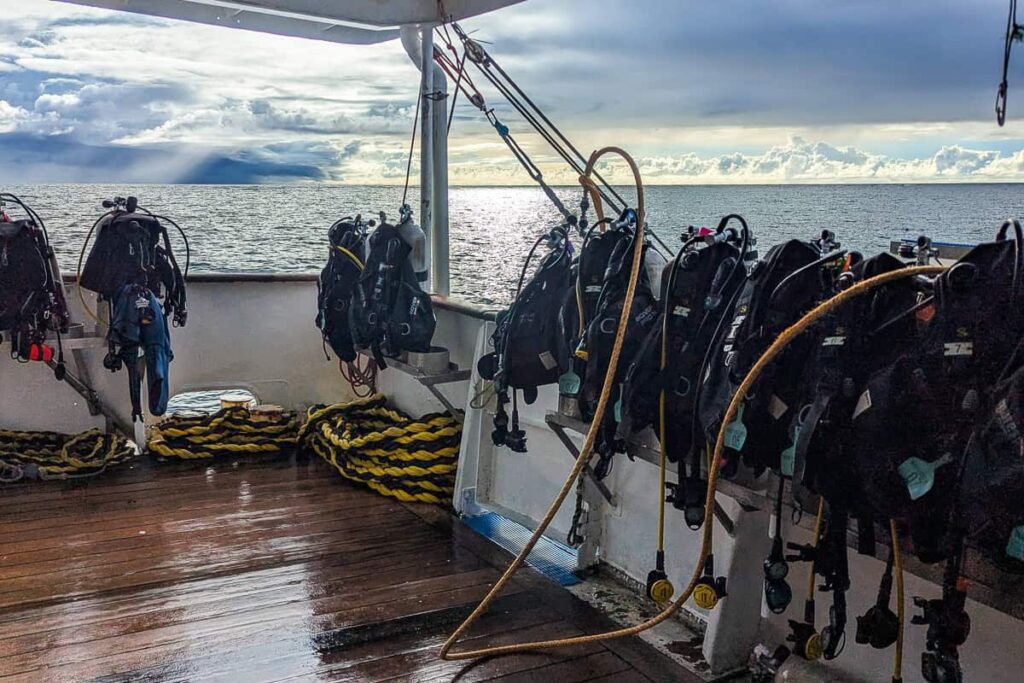
From Cairns, our Great Barrier Reef Liveaboard took us to Norman Reef, and the journey took about 1.5 hours. Most of this time was spent meeting other people and learning all the safety instructions.
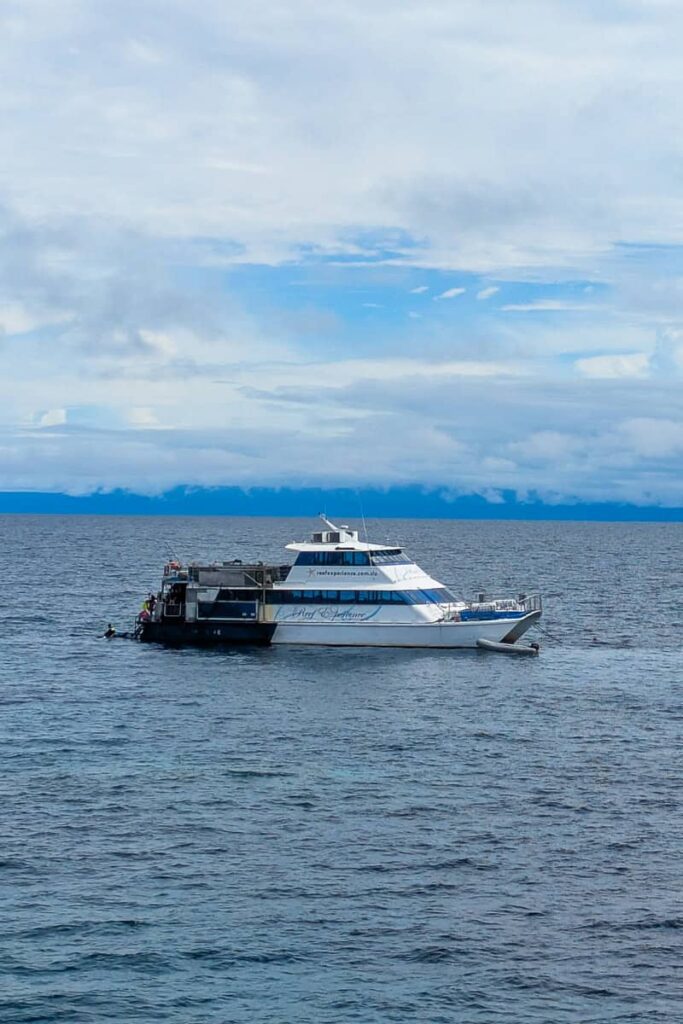
As we’ve briefly mentioned, some liveaboards have smaller courier boats that have day trip visitors onboard. This means that the liveaboard boat doesn’t have to come to shore every day. So we boarded the Reef Experience (day trip boat) that took us to our Reef Encounter Liveaboard boat.
Every boat journey was really smooth, and there wasn’t too much rocking or any need for feeling seasick. They do have motion sickness tablets onboard to purchase just in case. The staff will likely tell you if it’s bad weather. You can also do trips from Port Douglas with different companies.
Best time to visit the Great Barrier Reef
The best time to visit the Great Barrier Reef is between May and October, which is the dry season and winter. Cairns is tropical, so the temperature will still be warm and the ocean will be calmer as there’s less chance of rain and storms.
During this time, you may also see humpbacks and dwarf minke whales in the Great Barrier Reef!
As we only had a short opportunity to visit Australia, we couldn’t really choose the best time to visit the Great Barrier Reef. So we did our liveaboard in March and luckily experienced no storms, didn’t get stung by jellyfish, and it only rained in the evenings (but quite a lot).
What to expect from a Great Barrier Reef Liveaboard
So now we’ll share a brief overview of what we did during our Great Barrier Reef Liveaboard experience. We’ve also included the itinerary from the Reef Encounter!
Day 1 of our Liveaboard
7:30 – Head to the Marina & Boarding
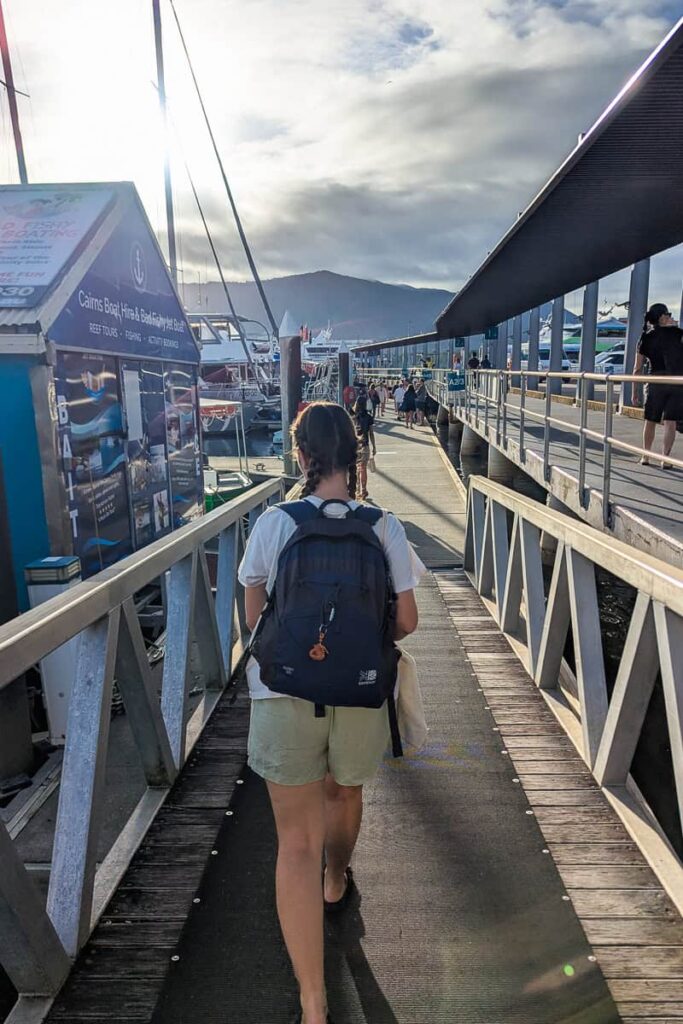
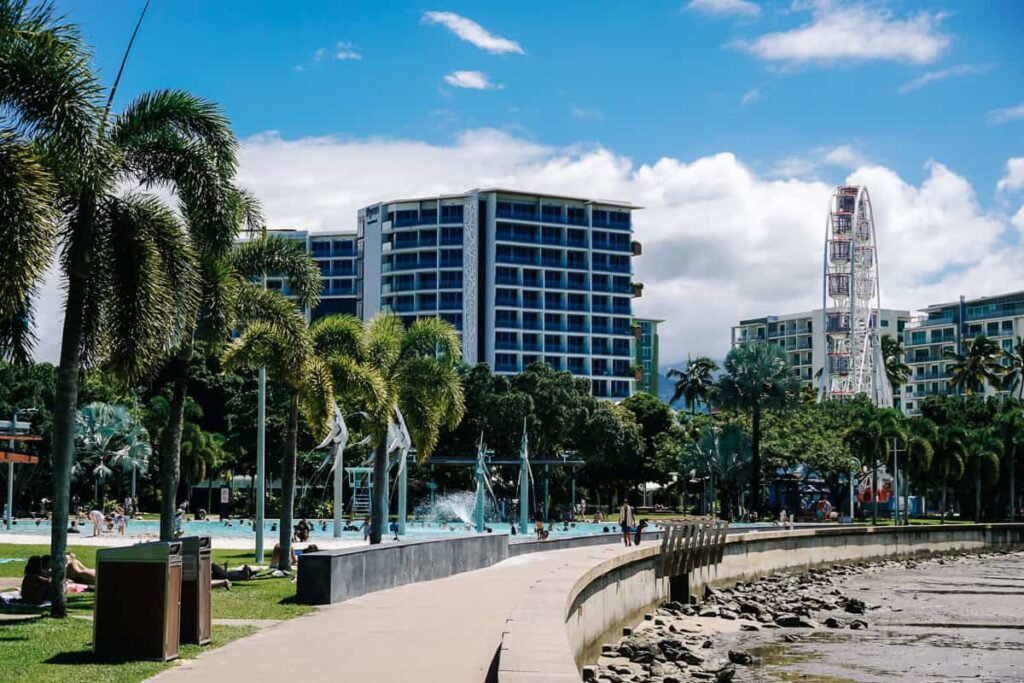
Our first day was an early wake-up as we packed up our things, left our big travel bag at our hostel and then walked to the Cairns Marlin Marina. The boarding starts around 7:30am, and they serve you breakfast on board.
For a liveaboard trip, you have to travel on the Reef Experience boat to reach the Reef Encounter boat out in the ocean. We were put in a group and this is where we met all of the other Liveaboard travellers!
It takes around 2 hours to reach Norman Reef from Cairns, which is where we had our first experience underwater! Within those 2 hours, we were served breakfast, showed our Padi license and had a safety briefing.
9:30 – Board the Liveaboard Welcome & Safety Talk
The staff introduced themselves and told us everything we needed to know!
10:00 – Room Check-in
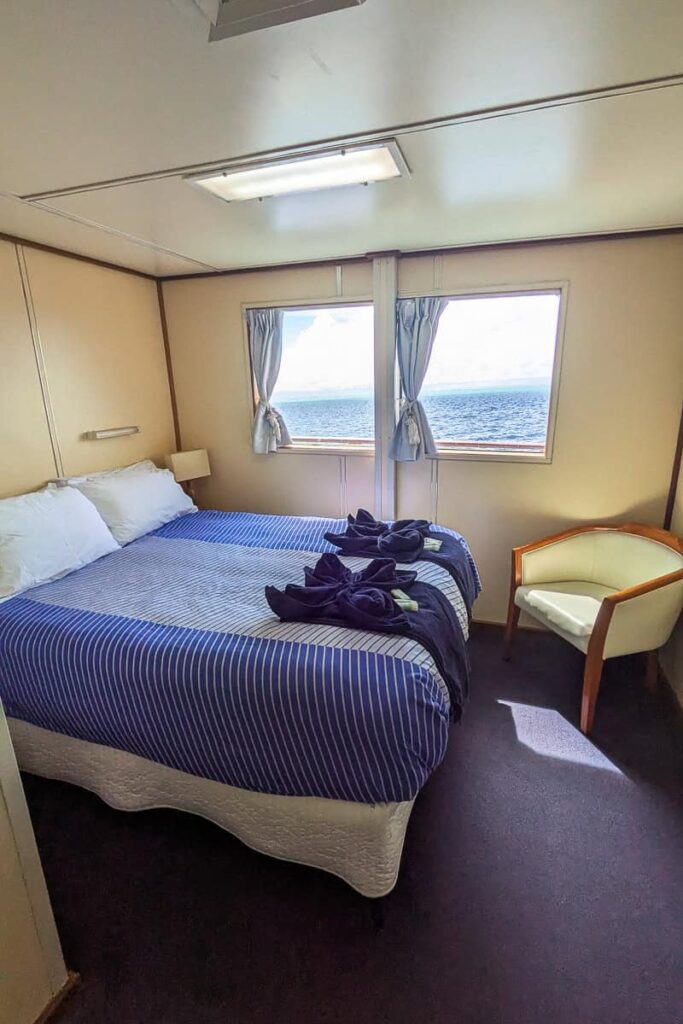
Once checked in, we quickly got changed so that we could start our first snorkel of the trip! Other than sleeping, we really didn’t spend much time in our room, as the communal area is great for talking to everyone. If you’re not doing the night dive, you’ll have a bit of extra time though.
10:30 – Water Session (Snorkelling)
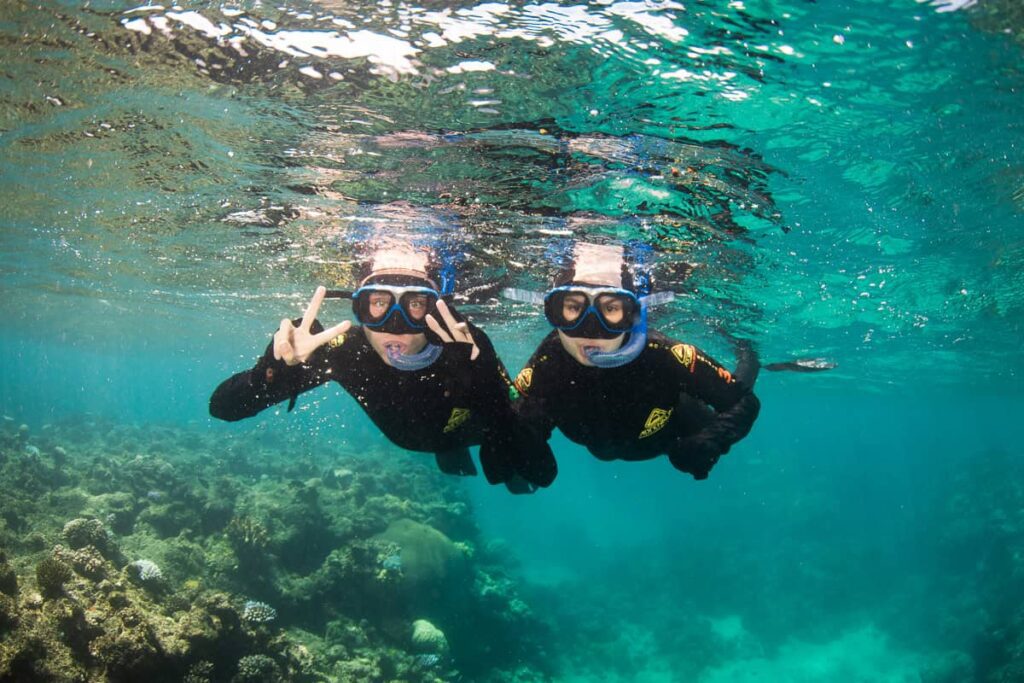
Our first time in the water at the Great Barrier Reef was at Norman Reef (Playground) for a snorkelling session. This was a great way to be introduced to the reef, although the waves were pretty strong. We were thankful to be diving for the rest of the day.
12:00 – Lunch
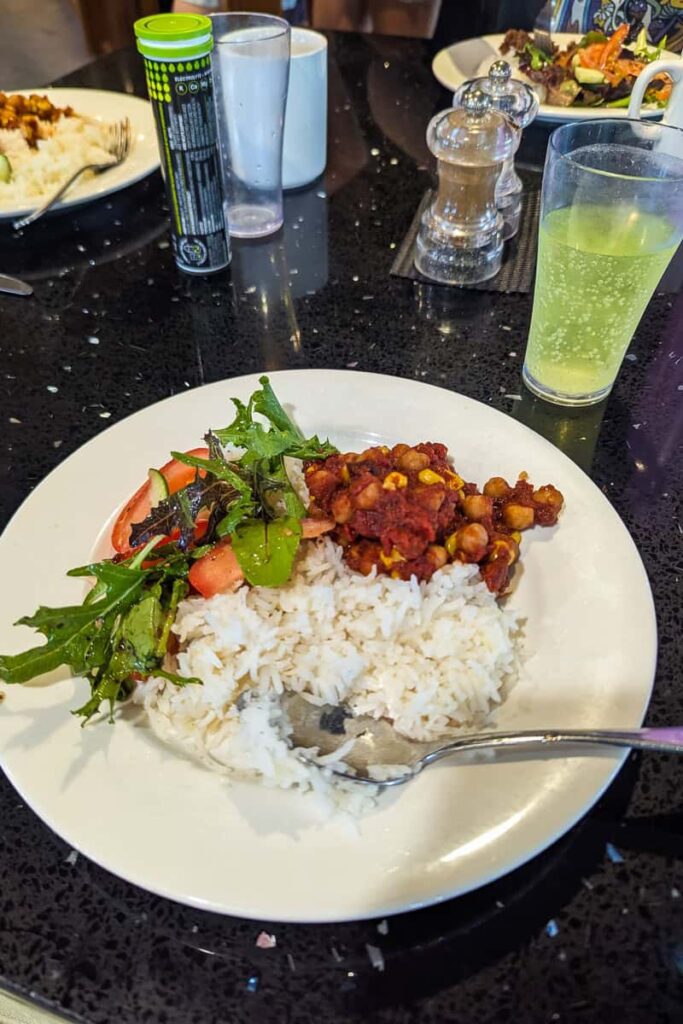
On the Reef Encounter, lunch is served at 12pm! For the veggies, it was tomato, chickpeas with rice and salad. We also had one of our electrolytes to get us through the day. We sat at a table with other divers, and it was a really social boat!
13:00 – Water Briefings
Before every dive, every diver gets a briefing on the new site. You don’t need a guide to explore the reef, but we chose to add a guide to all of our dives for comfort and ease; it’s $50 per person for a one-night stay.
13:15 – Water Session (Scuba diving or snorkelling)
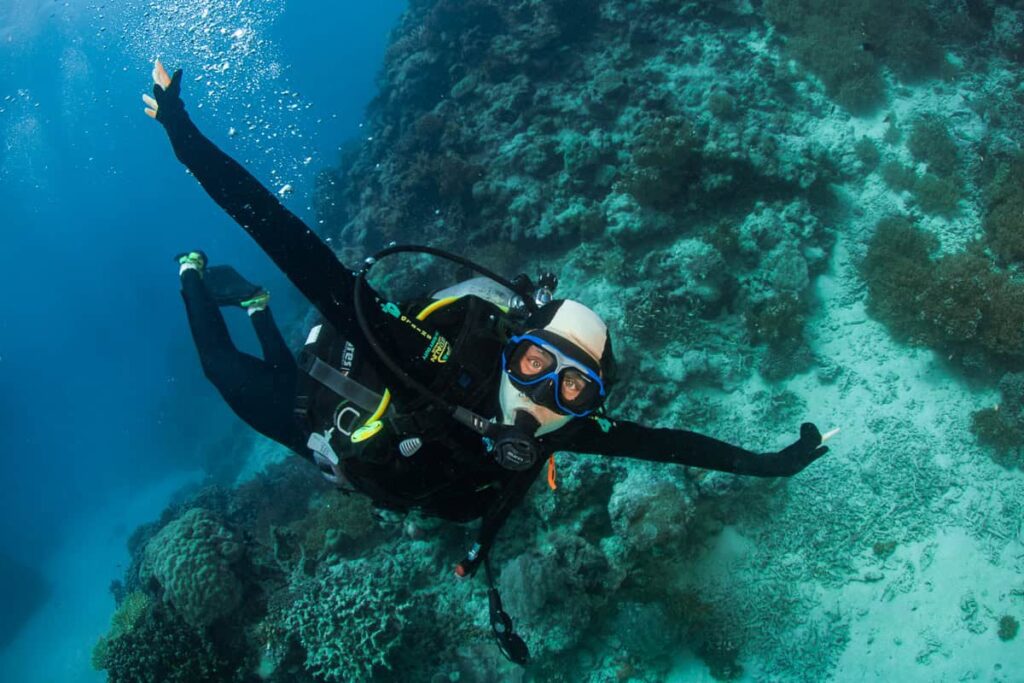
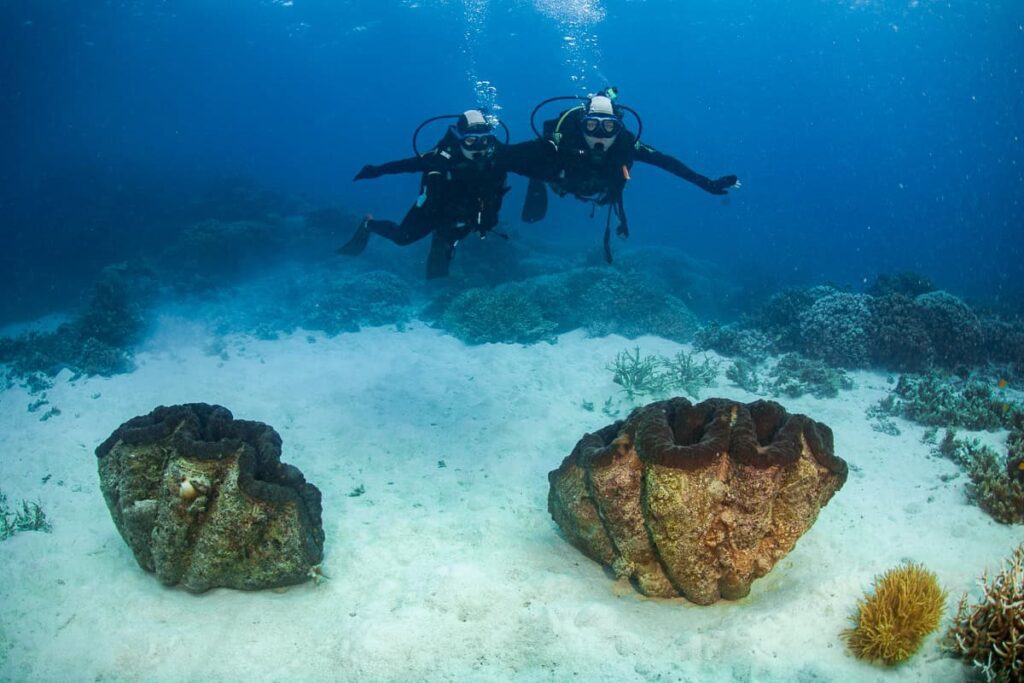
Our first time in the water as divers! We stayed at Norman Reef (Playground), but it felt completely different to snorkelling. We saw trigger fish, turtles, giant clams, jellyfish, lots of tropical fish (like our favourite parrot fish) and even got to see a reef shark!
15:30 – Water Session (Scuba diving or snorkelling)
For our third water session of the day (and the second dive), the boat moved locations. We were still located in Norman Reef, but this time in the Fingers area. We saw a beautiful lion fish, rabbit fish, more clams, turtles and a camouflage grouper.
17:30 – Night Dive Briefing
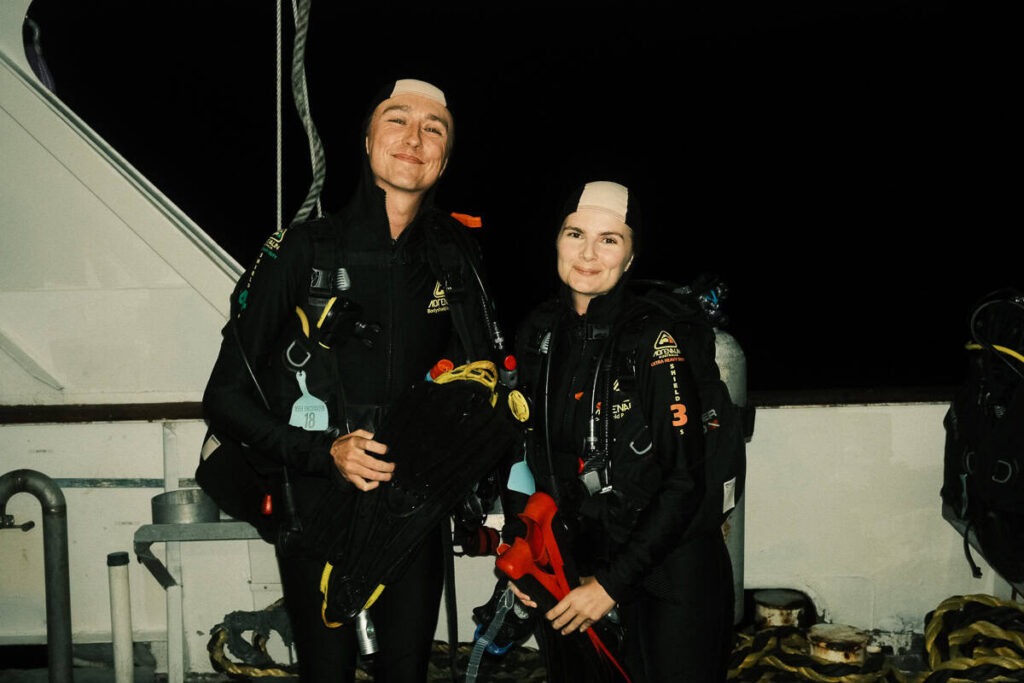
We were pretty nervous for the night dive, but our guide and all of the staff hyped it up so much and made the experience 100%! The briefing was perfect for asking any questions and understanding exactly what was going to happen.
18:00 – Dinner
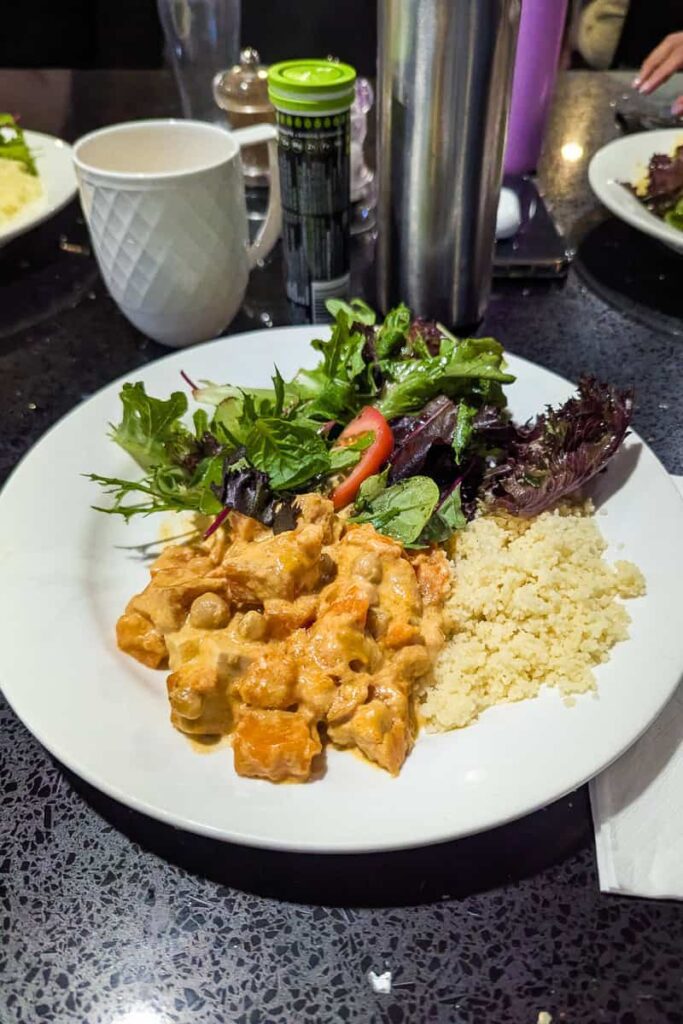
Dinner was served to us on plates, and we took a seat in the main dining hall again. We had Coconut Vegetable Curry with Couscous.
19:00 – Night Dive (certified divers only)
The night dive is not to be missed if you’re a certified diver! Our night dive was at Norman Reef (Fingers).
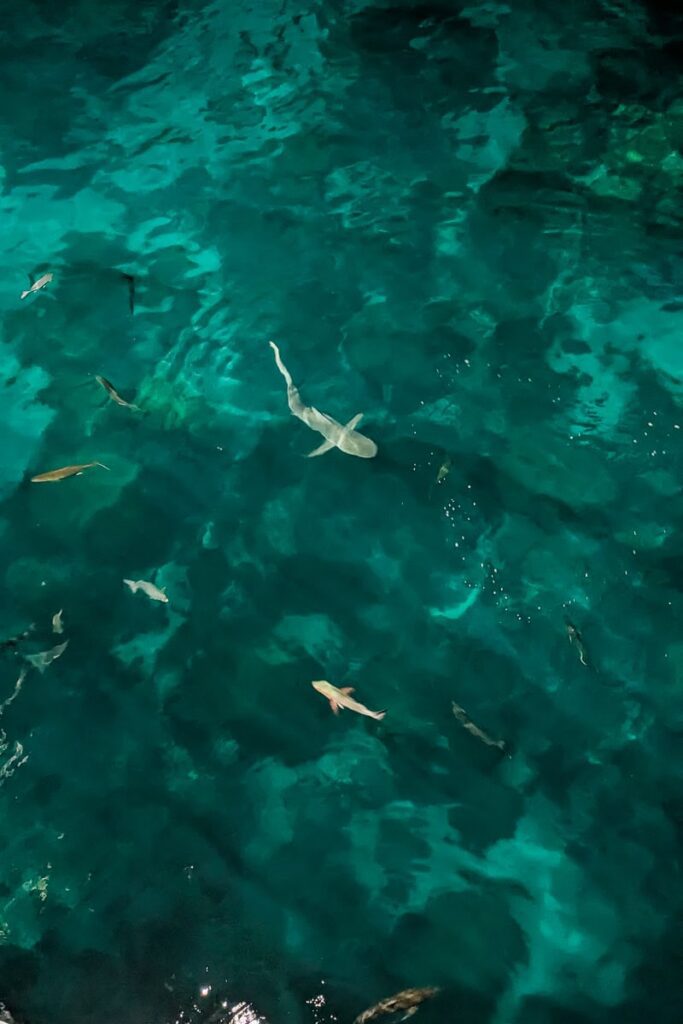
We saw so many sharks. So many. We will never forget their shiny eyes reflecting from our torches underwater. It was one of the best dives we’ve ever done! We didn’t spend as long in the water compared to our daylight dives.
20:00 – Dessert & Evening Chills
After the night dive, they served chocolate cake! We packed our own vegan snacks to avoid fomo.
We were pretty tired after our first day of diving, and it was raining a lot! Luckily, the boat has covered areas, so we could watch the reef sharks and fish circling the boat. It felt so surreal being in the middle of the ocean at night on our Great Barrier Reef Liveaboard.

Day 2 of our Liveaboard
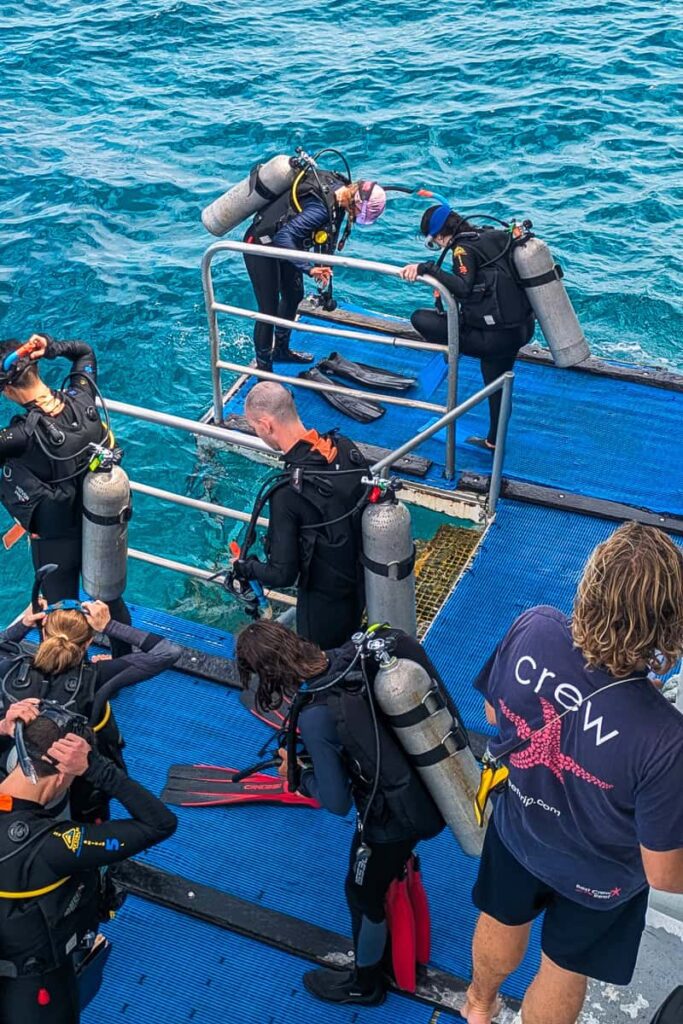
You will need to wake up at 5:50 am to get ready for the first snorkel or dive session of the day. We woke up and immedialty starting getting ready as stinger suits or wetsuits can take a bit of time!
6:15 – Sunrise Water Session
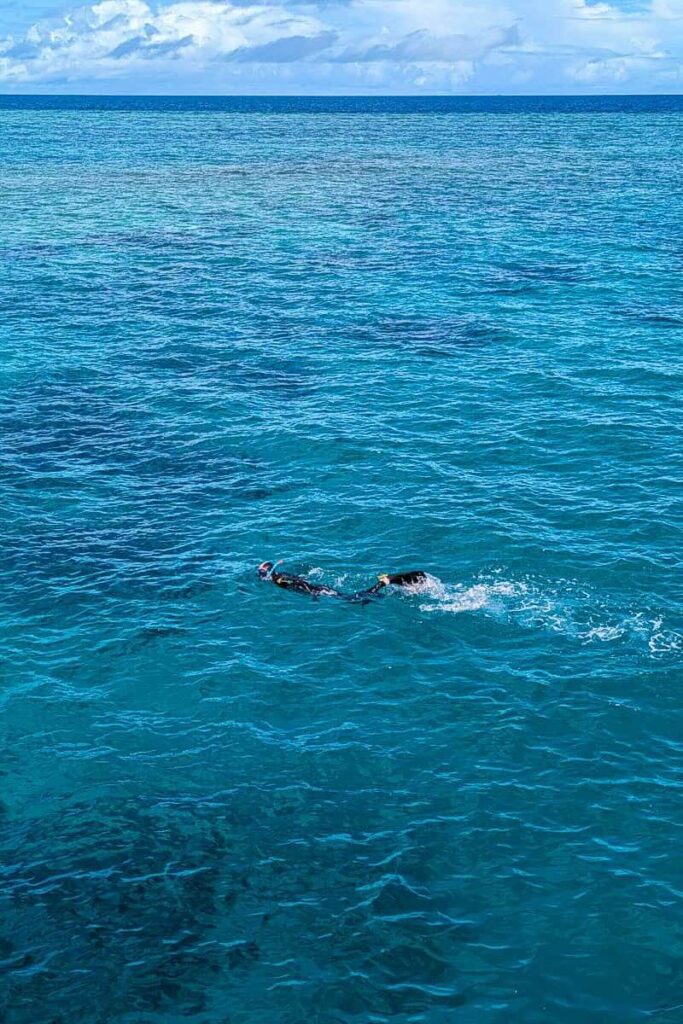
Still at Norman Reef (Fingers), we jumped in the water for our early morning dive. It was such a beautiful time of day to dive, and another bonus of doing the liveaboard in Australia. On this dive, we saw more turtles, one reef shark and Nemo’s!
7:30 – Breakfast Buffet
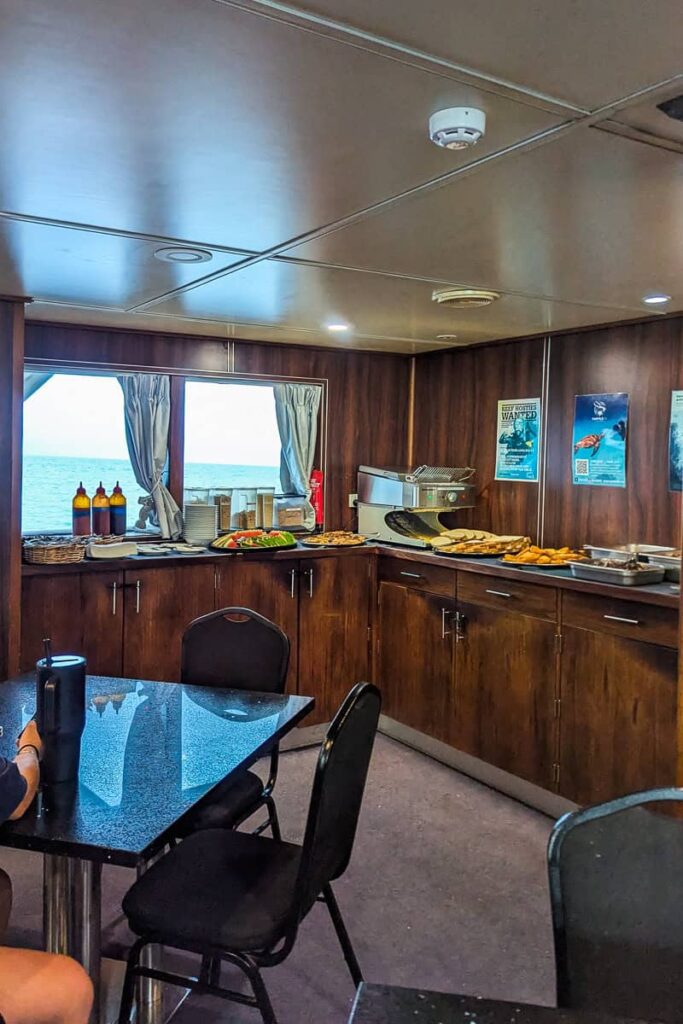
We were pleasantly surprised with the breakfast buffet, especially for vegans. There were vegan banana pancakes, hash browns, beans, cereal, toast, tomatoes and mushrooms. It was a feast!
10:30 – Water Session (Scuba diving or snorkelling)
The new location our boat moved to was Saxon Reef (Twin Peaks). This was our last dive of the day, as the next water session was only snorkelling. Other than the regular fish, we saw more anemonefish and lionfish.
12:00 – Lunch
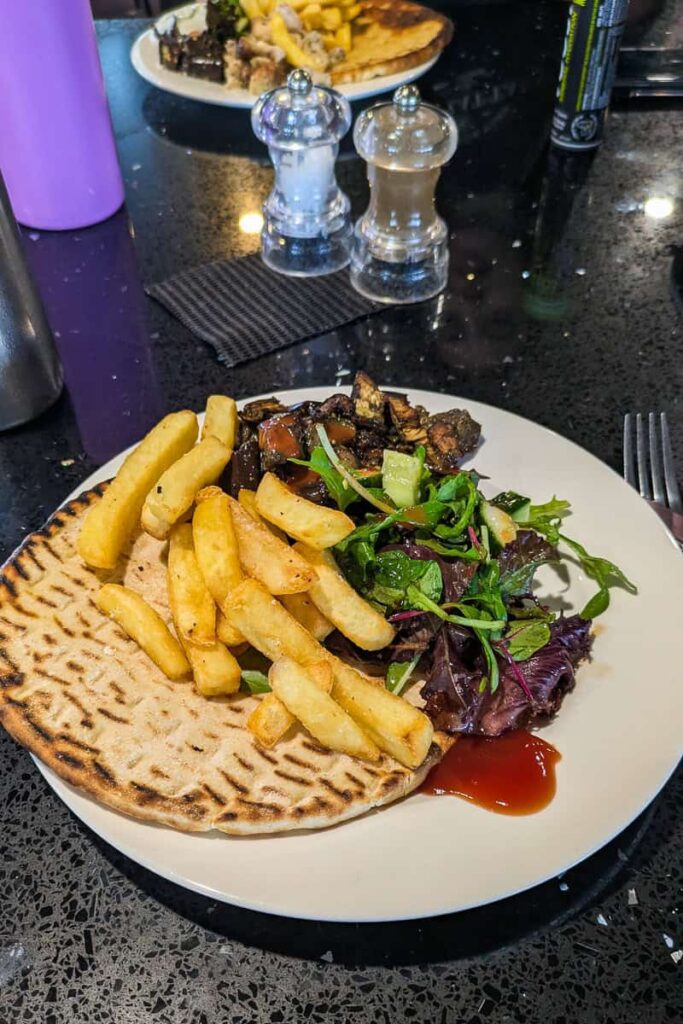
Lunch was a serve yourself Greek Style Pitta with Aubergine and Fries. Honestly, the food was really good on this Great Barrier Reef Liveaboard!
13:15 – Water Session (Snorkelling)
Our final water session was only snorkelling, and so sad to say goodbye to the reef.
14:45 – Board Reef Experience for transfer back to Cairns
After packing up our bags and drying off a bit, the Reef Experience boat arrived (which is the day trip boat) to take anyone back to Cairns.
15:15 – Snacks
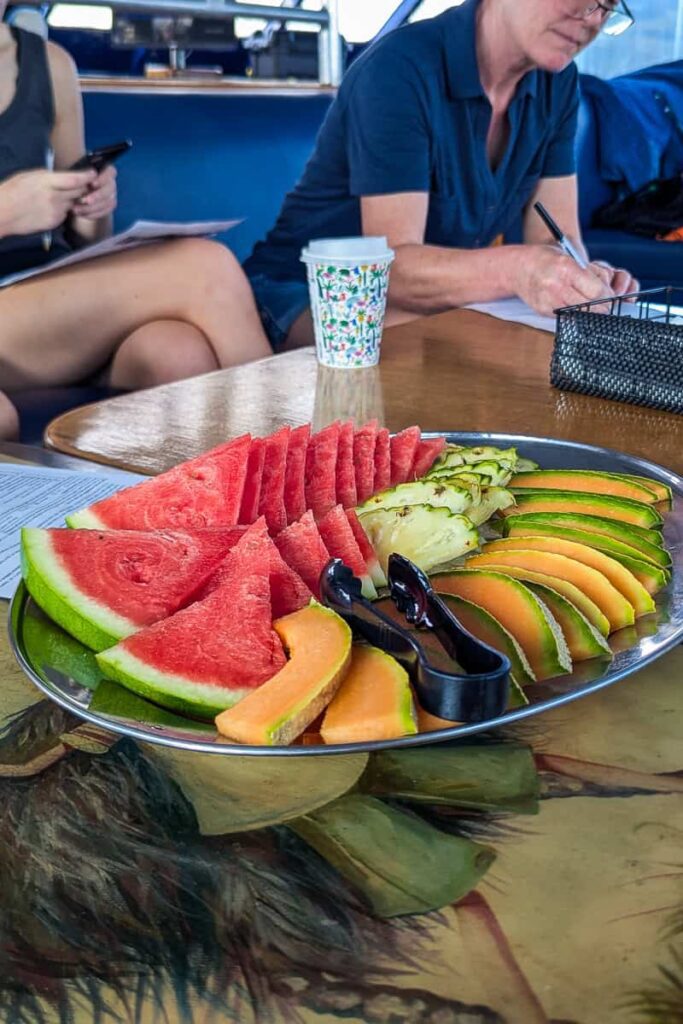
Once aboard the Reef Experience, there are lots of fruit and crackers to enjoy before arriving back in Cairns.
16:30 – Arrive at Cairns Marlin Marina
So that’s what to expect on a Great Barrier Reef Liveaboard!
Overview of our Great Barrier Reef Liveaboard
Overall, we absolutely loved our time in the Great Barrier Reef, and we’re so glad we chose the liveaboard option. We didn’t even need to compromise on comfort as our room aboard the boat was so nice!
We didn’t have expectations on the fish we wanted to see other than the reef sharks (which definitely delivered)!
It was a difficult decision to decide between a day trip and a liveaboard, but after staying overnight on the Reef, it’s truly the best way to enjoy it.
Here’s the locations we visited during our Great Barrier Reef Liveaboard, but this can change on any trip. We were in the Norman Reef (Fingers), but it was different each time!
- Norman Reef – Playground
- Norman Reef – Fingers
- Norman Reef – Fingers (night dive)
- Norman Reef – Fingers (sunrise dive)
- Saxon Reef – Twin Peaks
Food Options on our Liveaboard
On our Reef Encounter Liveaboard, we were able to request food for a vegan diet. Overall, it was very wholesome and tasty food! In general, we had great options for all meals, and it was only the dessert that we missed out on. There’s always fruit on board so you won’t go hungry!
Here’s a breakdown of the food we were offered as vegans on a Great Barrier Reef Liveaboard:
- Lunch 1 – Tomato Chickpeas with Rice and Salad
- Dinner – Coconut Vegetable Curry with Couscous and Salad
- Breakfast – Full English Breakfast Buffet with hashbrowns, cereal, toast and banana pancakes!
- Lunch 2 – Greek Style Pitta with Aubergine and Fries
Plus, there was drinking water, tea, coffee and fruit available at all times!
If we had more time in Cairns, we would have loved to do a Great Barrier Reef Scenic Flight. A pure bucketlist activity after doing an amazing liveaboard.
Is there a phone signal on the Great Barrier Reef?
Yes! We spent most of our time at Norman Reef, and we surprisingly had signal. There’s no wifi on the boat, and it’s probably best to take this time to disconnect and focus on the ocean and nature. But we know it’s good to keep friends and family updated!
You can buy e-sims on Airalo when you arrive in Australia, so you don’t need to worry about finding a physical sim card.
How to get to the Great Barrier Reef
The Great Barrier Reef is huge, and there are multiple ways to see the beautiful corals. In this guide, we’ve spoken about liveaboards from Cairns. Cairns has an international airport that connects to major cities in Australia and other countries, such as Auckland or Singapore.
Once you’ve booked your Great Barrier Reef Liveaboard trip, you’ll need to meet at the Cairns Marlin Marina to board the boat on the day of departure. Most companies have a pick-up option for a fee, but Cairns is quite a small city, so we managed to walk.
Don’t forget about travel insurance for diving – we recommend DiveAssure!
Is it worth doing a Great Barrier Reef Liveaboard?
We asked ourselves this question too many times when we were thinking of booking a liveaboard on the Great Barrier Reef. Finally, after going on our Reef Encounter Great Barrier Reef Liveaboard, we definitely think it’s worth it!
The experience is unmatchable to anything we’ve done before! Although it was our first liveaboard, it’s a very awesome place to do your first liveaboard!
Yes, the prices are crazy, so if you’re really on a tight budget, you may have to skip it, but it’s truly a bucketlist activity. We recommend heading to Southeast Asia if you want to find less expensive liveaboards!
Have an incredible time spending the night on the Great Barrier Reef! Find us on Instagram to see our adventures (@thesunrisedreamers)! Check out more of our Australia Travel Guides.
LIKE THIS POST? PIN IT FOR LATER & SHARE IT WITH OTHERS!